Indoor and Outdoor Kiosks: Engineering Differences Buyers Must Check
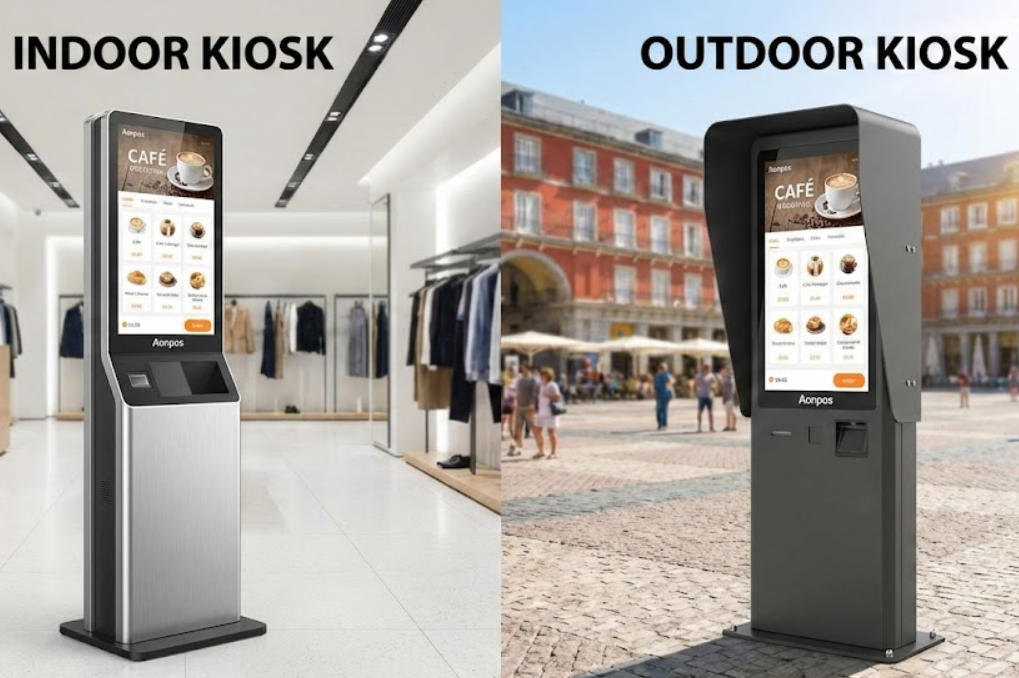
Review weather exposure, temperature, sunlight and service conditions before deciding whether an indoor kiosk can suit an outdoor location.
Indoor and outdoor suitability is determined by the tested configuration and installation conditions, not the enclosure's appearance. A kiosk under a roof can still face wind-driven rain, condensation or direct sun. Describe the site exposure before selecting protection ratings or assuming that a sheltered area behaves like an indoor lobby.

Evaluate the environmental load
Record temperature range, humidity, sunlight, dust and possible water exposure. Consider internal heat from electronics and solar loading together. Ask for evidence covering the complete assembly, including doors, vents and fitted modules. An ingress rating for one face does not establish whole-unit weather protection, corrosion resistance or temperature suitability.
Review the customer and service experience
- Test display readability and touch behavior in expected lighting and glove conditions.
- Protect receipt and payment interactions from weather without obstructing access.
- Plan drainage, anchoring, electrical protection and network entry with qualified installers.
- Check how paper replacement and repairs are performed in poor weather.
- Confirm remote monitoring and a safe response to condensation or temperature alarms.
Approve the site-specific design
Use the supplier's documented limits and any necessary engineering assessment to accept the installation. Do not retrofit an indoor unit with an improvised cover and call it outdoor-rated. A correct decision balances hardware protection, user access and maintenance capability at the actual site rather than selecting a broad indoor or outdoor category from a catalogue.