Cash Register to POS: Build a Realistic Retail ROI Worksheet
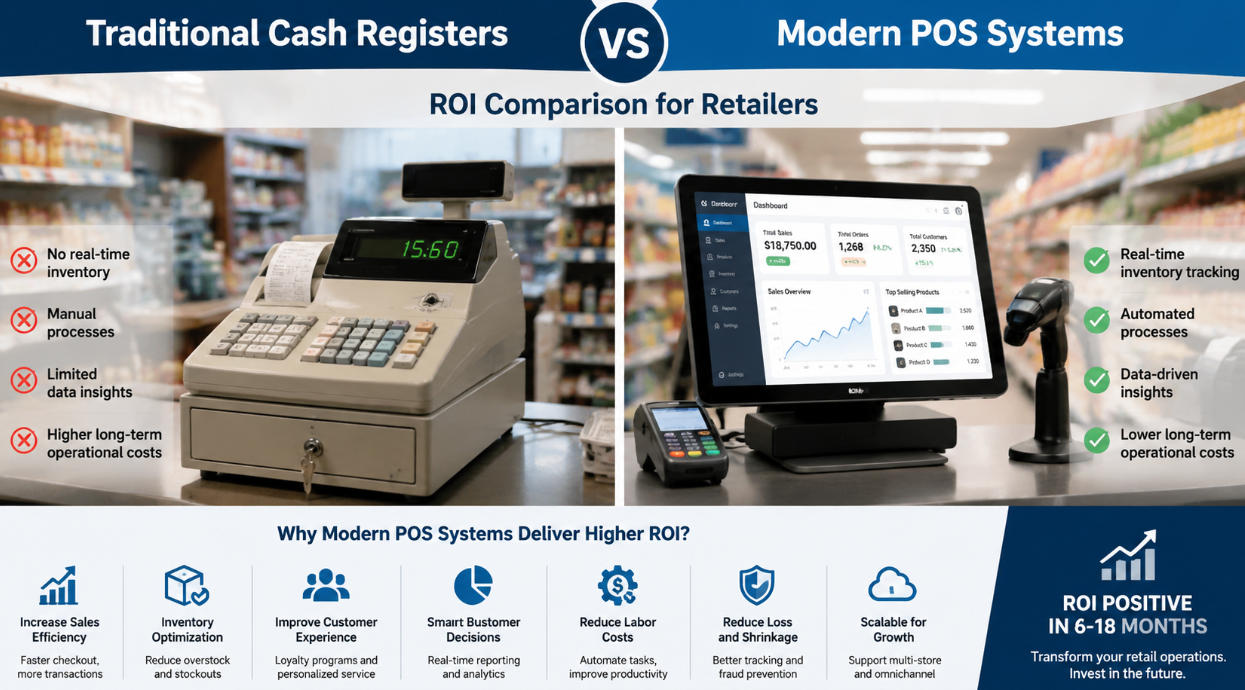
Evaluate a register-to-POS investment using verified costs, measured process changes and transparent assumptions about benefits.
A POS investment should be justified with the retailer's own data. Faster checkout, fewer corrections and better stock visibility can create value, but none is automatic. Build a worksheet that separates one-time cost, recurring expense and measured operational change instead of relying on a universal payback claim.

Count the full cost
Include terminals, peripherals, licences, subscriptions, migration, installation and training. Add support, payment-service changes and replacement logistics where relevant. Keep taxes and financing treatment consistent with advice from the business's accountant. Compare the same period and service scope for the existing register and proposed POS.
Measure benefits conservatively
- Time saved: observe the actual task and whether the time can be used productively.
- Corrections: compare recorded errors before and after a controlled pilot.
- Inventory: distinguish improved visibility from a proven reduction in waste or loss.
- Revenue: count only changes supported by evidence, not all sales after installation.
- Reliability: use documented incident and recovery data rather than assumed uptime.
Show uncertainty
Use low, expected and high scenarios where benefits are uncertain. State the assumptions behind any payback calculation and review results after deployment. A decision may still be sensible for supportability or record quality even when immediate financial return is modest. Transparent arithmetic is more useful than promising that every retailer will recover its investment within the same number of months.