Centralized Kiosk Management for Supermarket Chains: A Rollout Blueprint
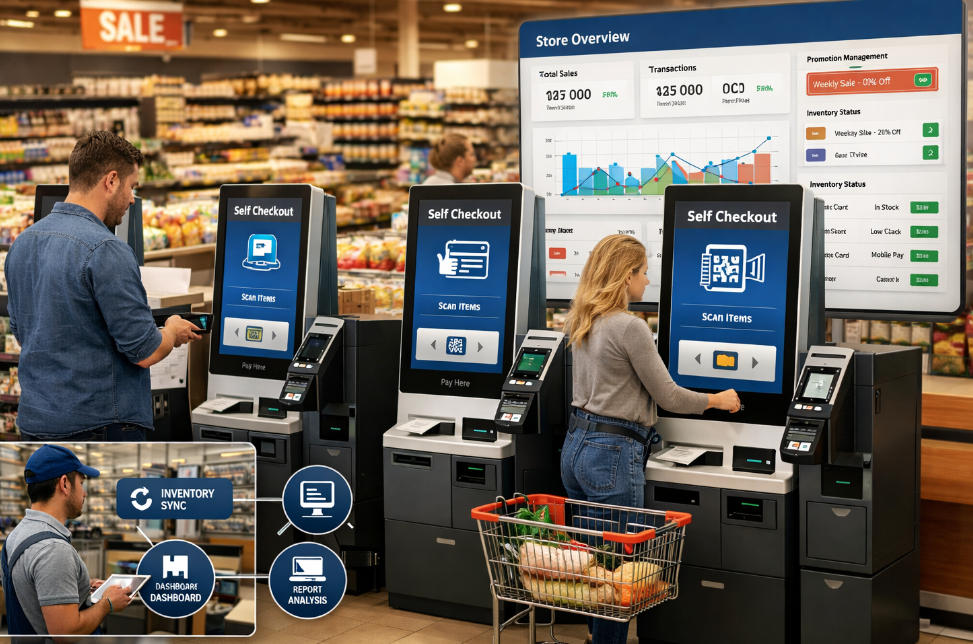
Coordinate a supermarket kiosk fleet with a common image, store-specific configuration, monitoring, spare strategy and controlled release process.
A chain needs consistency without pretending that every store has the same network, counter layout or service demand. Centralized management should provide a common technical baseline while keeping local differences explicit. The rollout plan must cover both the customer journey and the people who maintain each store.

Separate common and local configuration
Standardize application versions, security policy, device identity and approved peripheral drivers. Keep store identifiers, printers, network settings and opening hours in controlled local configuration. Use an inventory that links each unit to its model, revision, location and support owner. This makes a change to one store deliberate rather than an accidental fleet-wide edit.
Release in stages
- Test the image at a laboratory station with representative transactions.
- Pilot one or a small number of stores with different network and workload conditions.
- Monitor checkout, payment, printer and recovery incidents before the next wave.
- Keep a previous image and on-site spare for a controlled rollback.
- Communicate staff changes, maintenance windows and escalation contacts clearly.
Measure service reliability
Review completion, assistance requests, downtime, paper incidents and support response by store. Investigate patterns instead of blaming a local team for a fleet-wide defect. Centralized control should shorten diagnosis and make approved recovery repeatable, while store staff retain clear instructions for simple physical tasks and customer assistance.