Staffed POS or Self-Service Kiosk? Choose the Right Service Mix
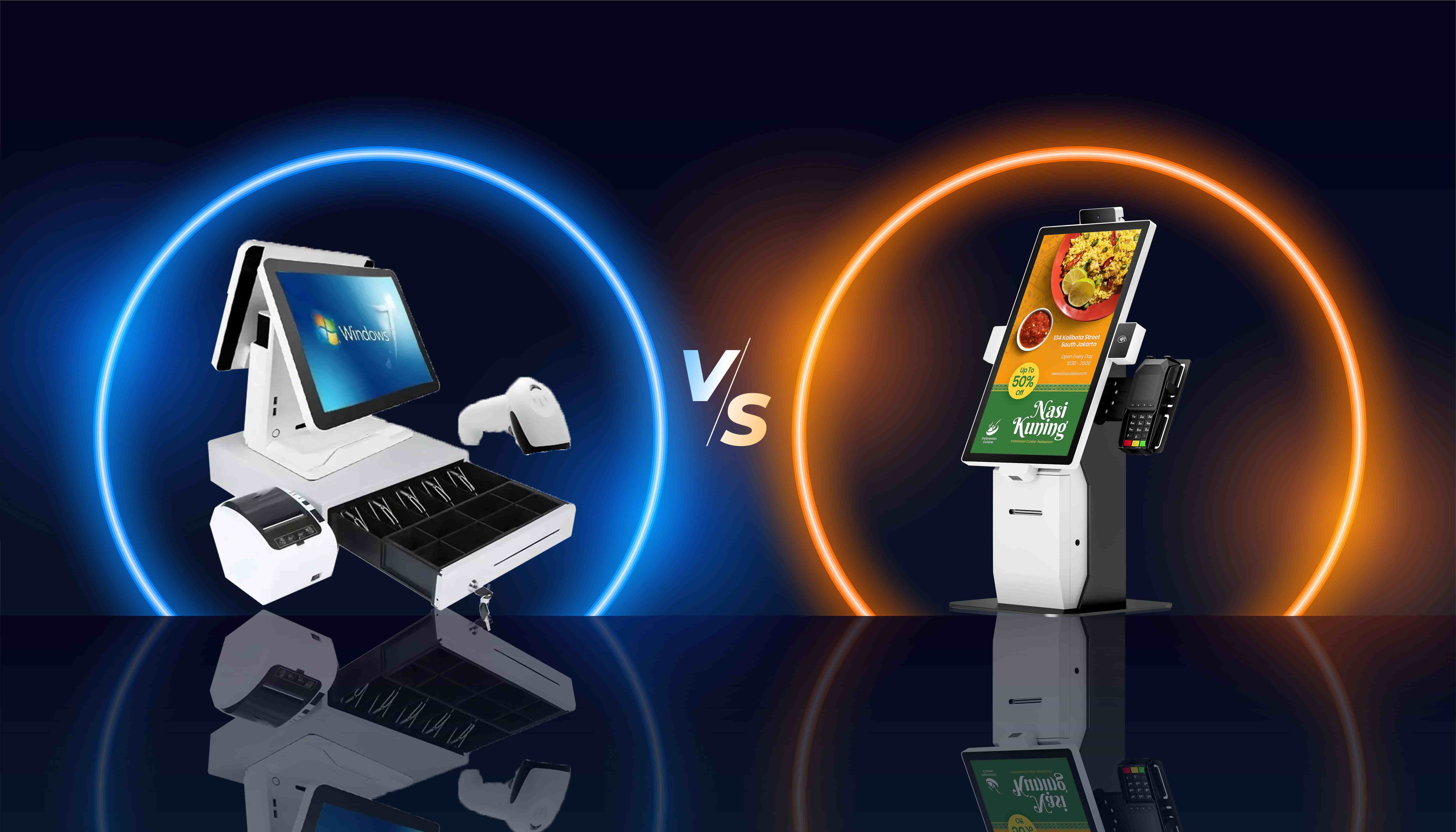
Decide which transactions belong at a staffed counter and which can move to self-service by testing complexity, assistance and recovery needs.
A staffed POS and a kiosk are not mutually exclusive choices. Many businesses benefit from keeping complex transactions with employees while offering self-service for simpler tasks. Evaluate the transaction mix and customer needs before assuming a kiosk should replace the main counter.

Identify transactions that need judgment
Returns, unusual discounts, regulated items and complex advice often require staff involvement. A kiosk may suit repeatable ordering or straightforward bill payment, but only if the application handles exceptions clearly. Count how often customers need help and whether assistance can arrive without blocking the remaining service points.
Compare the operating requirements
- Staffed POS: optimize the interface for trained users and rapid access to authorized functions.
- Self-service: use plain prompts, visible progress, safe cancellation and an obvious assistance route.
- Both: confirm payment integration, accessibility, privacy and dependable peripherals.
- Support: allocate cleaning, paper replacement and fault response rather than assuming unattended means maintenance-free.
Pilot the combination
Run the proposed service mix during representative demand and record completion, assistance and queue behavior. Include the work moved to supervisors and service staff when evaluating cost. Keep a staffed fallback and review customers who cannot use the kiosk. The best arrangement is the one that handles the business's actual mix reliably, not the one with the greatest number of automated stations.