POS Software vs Hardware: Draw the Responsibility Line Before Buying
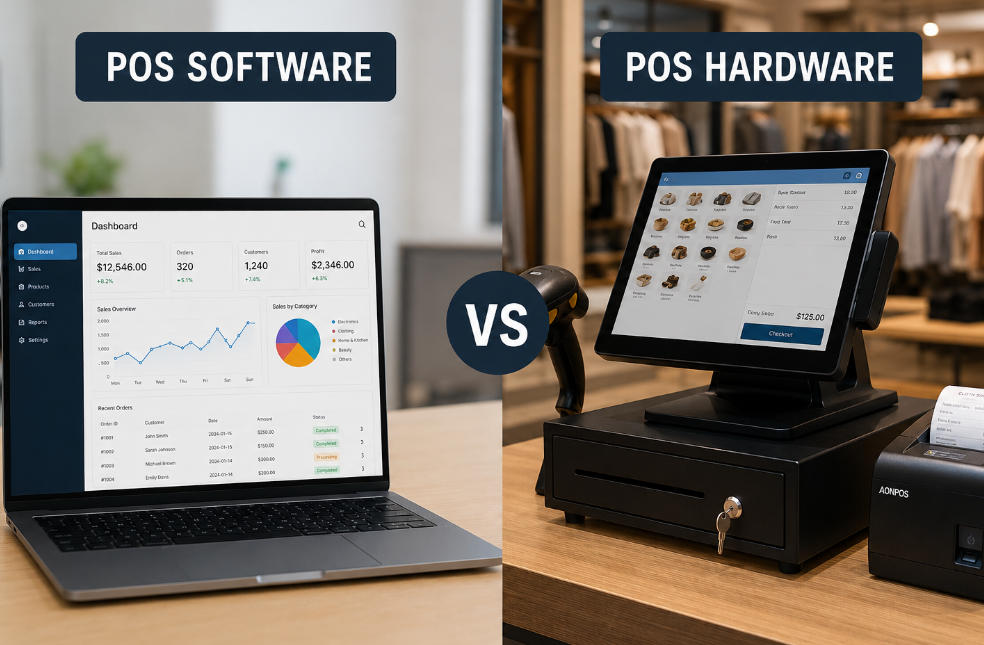
Understand which POS requirements belong to applications, devices and external services so procurement and support responsibilities remain clear.
POS software defines business behavior, while POS hardware supplies the computing and interaction platform. External services may provide payment authorization, cloud storage or ecommerce connections. These layers depend on each other, but confusing their responsibilities can lead to buying equipment that cannot provide the advertised business outcome.

Assign requirements to the right layer
Inventory rules, promotions, permissions and reports belong primarily to the application. Display size, ports, storage and touch behavior belong to hardware. Acquiring approval and settlement belong to the payment arrangement. A supplier may bundle several layers, but the quotation should state exactly which products, licences and services are included.
Validate the interfaces between layers
- Confirm the application's operating-system and resource requirements.
- Test scanner, printer and payment integrations using supported drivers and SDKs.
- Define network and offline behavior for connected services.
- Keep a versioned configuration and a clear owner for updates.
- Agree how support routes faults that cross organizational boundaries.
Buy a supported combination
Evaluate the complete workstation with representative data and failure cases. A faster terminal cannot add a missing software feature, and a feature-rich application cannot operate on unsupported drivers. Keep approval records so a later component or software substitution triggers review. The goal is a maintainable combination, not a competition to decide which layer is more important.