Outdoor Payment Kiosks for Public Spaces: A Site Readiness Guide
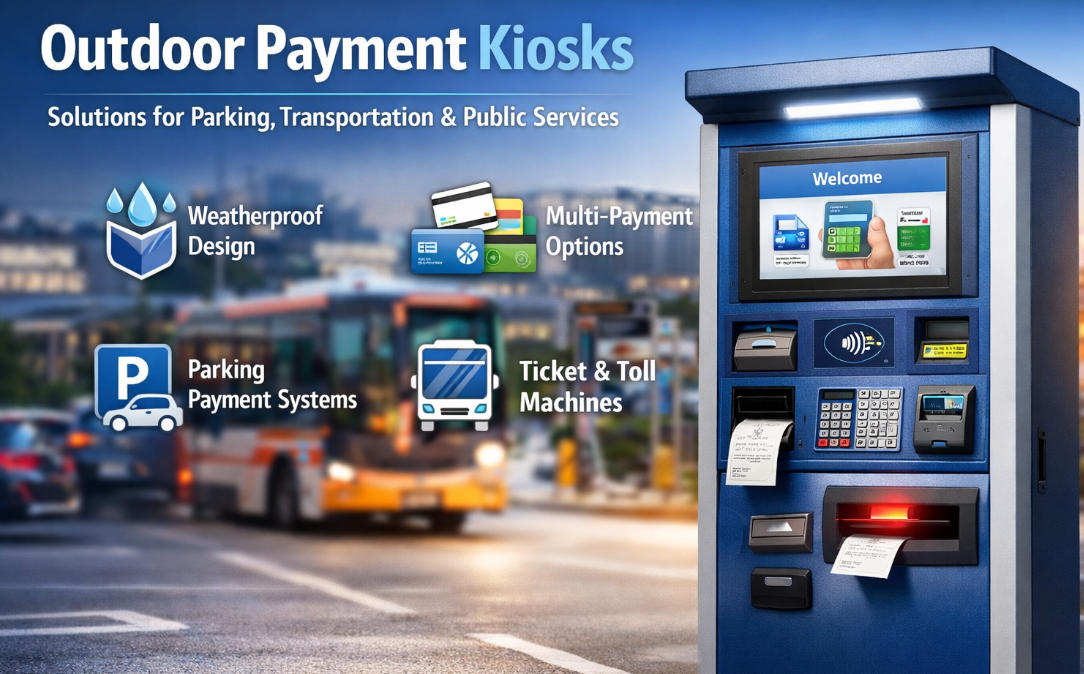
Prepare an outdoor payment installation by reviewing environmental exposure, accessible interaction, utilities, security and maintenance ownership.
An outdoor payment kiosk becomes part of public infrastructure. Weather, sunlight, vandalism, power quality and maintenance access can all affect service. Before selecting the equipment, survey the exact site and identify the organizations responsible for installation, payment operation and long-term upkeep.

Document the site's conditions
Record expected temperature, rain direction, dust, salt exposure, condensation and direct sun. Verify the assembled kiosk's rated limits rather than relying on one enclosure label. Ask qualified installers to review electrical protection, anchoring, drainage and cable entry. An ingress rating does not establish impact resistance or suitability for every cleaning method.
Make the interaction usable
- Test readability in bright light and touch behavior under expected user conditions.
- Confirm reach, approach space and local accessibility obligations.
- Protect the payment and receipt areas without obstructing the customer.
- Use provider-approved unattended payment hardware and secure service access.
- Provide visible assistance information and a documented response to an unavailable kiosk.
Plan maintenance as part of procurement
Agree inspection frequency, consumable replacement, alert handling and spare modules. Test recovery after network loss and environmental alarms. Keep the application transaction state separate from device availability so an outage does not create duplicate payments. Public-space reliability comes from a maintained site-specific design, not from adding a weather cover to an indoor terminal.