OEM vs ODM POS Projects: Clarify Ownership Before Choosing a Model
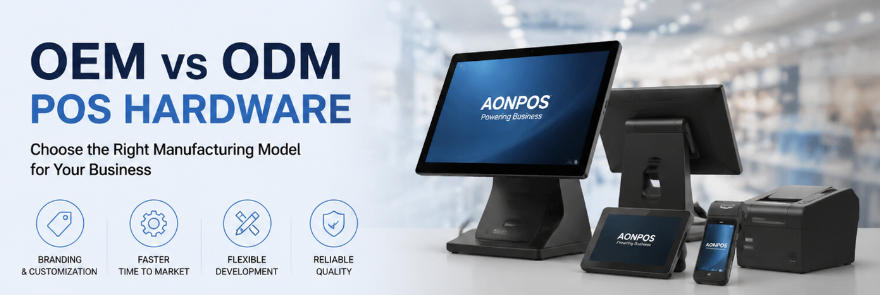
Compare OEM and ODM arrangements through design scope, intellectual property, tooling, approvals and responsibility for future changes.
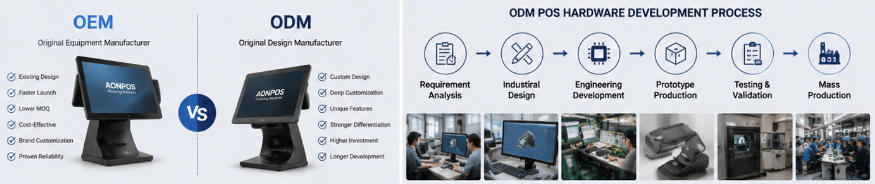
OEM and ODM are used inconsistently across hardware suppliers. Rather than deciding from the label alone, describe who designs the product, owns the drawings, approves changes and supports it after delivery. A standard platform with branding and a buyer-owned custom design involve different commitments.

Map the project responsibilities
Identify enclosure and electronics design, firmware, software preparation, tooling and destination evidence. State which existing platform is being used and which elements are new. Clarify intellectual-property rights and permitted reuse with appropriate legal advice. A customization fee does not automatically transfer ownership of all underlying design material.
Compare the practical trade-offs
- Existing platform: potentially less engineering work, but design control and differentiation may be limited.
- Buyer-defined design: more control, with greater development, validation and lifecycle responsibility.
- Both: require approved samples, revision records and substitution rules.
- Agree minimum quantities, nonrecurring charges, lead-time assumptions and change costs.
- Plan unique spares and what happens if the supplier or component becomes unavailable.
Use the contract to define the model
Attach scope, drawings, acceptance criteria and ownership terms rather than relying on a three-letter abbreviation. Pilot the final build and keep support obligations explicit. Choose the arrangement that fits the buyer's engineering capacity and product strategy, not an assumption that one model is always faster, cheaper or more original.