Kiosk SDK and API Integration: Build a Device Contract Before Coding
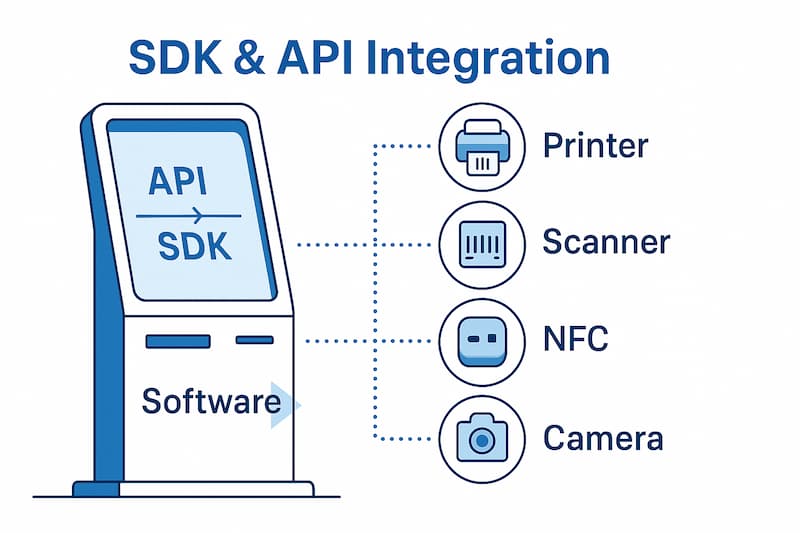
Define device states, supported versions and failure behavior before integrating scanners, printers and payment modules into a kiosk application.
A kiosk SDK or API is useful when it provides predictable behavior across the whole device lifecycle. A successful print call in a demo is only one case. Developers also need initialization, status, timeout and recovery behavior, plus a clear boundary between general hardware control and provider-managed payment functions.

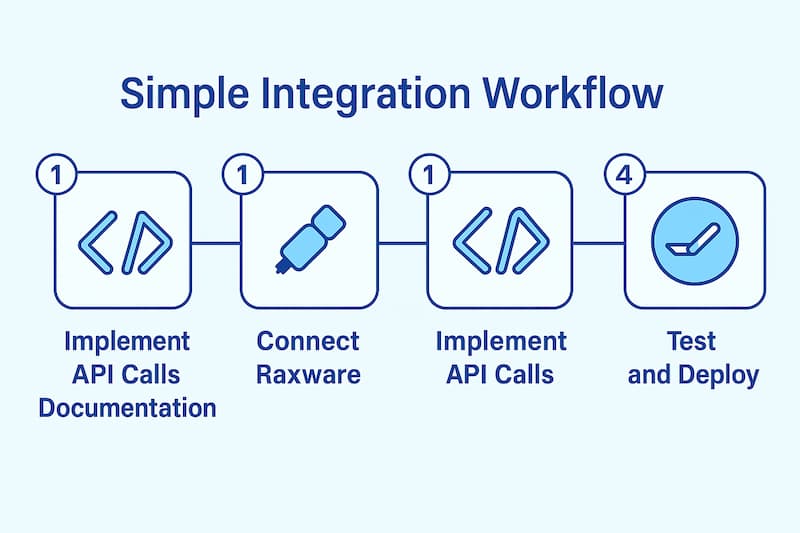
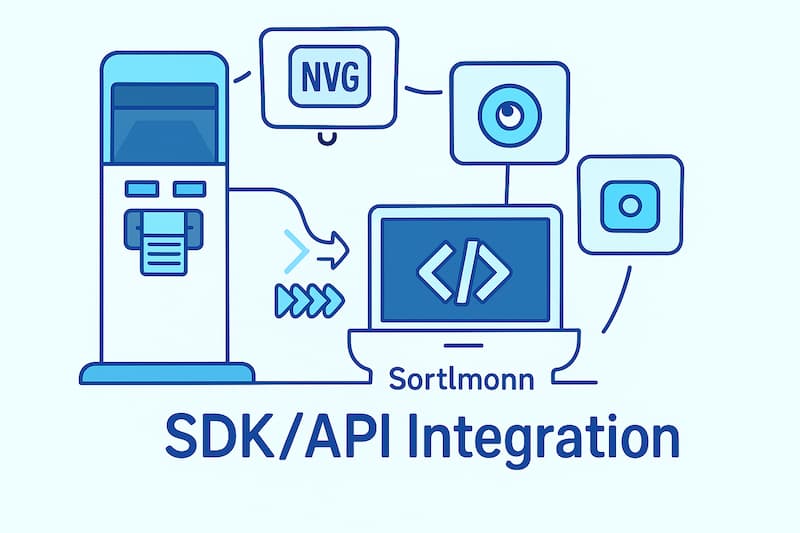
Write the device contract
Record supported operating systems, processor architectures, runtime versions and licence terms. Define each module's states and how the application learns about a disconnect or unavailable consumable. Specify whether calls are synchronous, whether events can be duplicated and which operations are safe to retry. Keep integration secrets outside distributed client code where possible.
Build tests around failures
- Printer: out of paper, open cover, interrupted job and ambiguous completion.
- Scanner: duplicate events, unsupported codes and disconnect during a session.
- Payment: use the provider's certified flow, status queries and refund process rather than storing raw credentials.
- Application: restart with an unfinished session and restore a consistent transaction state.
- Updates: validate module firmware and SDK changes against a versioned test suite.
Separate device success from business completion
A printed receipt does not prove payment, and a successful scan does not prove the record exists. Keep a durable business transaction identifier and reconcile external results. Package diagnostics without personal or payment data. This contract gives hardware vendors and software teams a common basis for investigating faults instead of debating which side of an interface caused them.