Reducing POS Hardware Cost Without Creating Support Debt
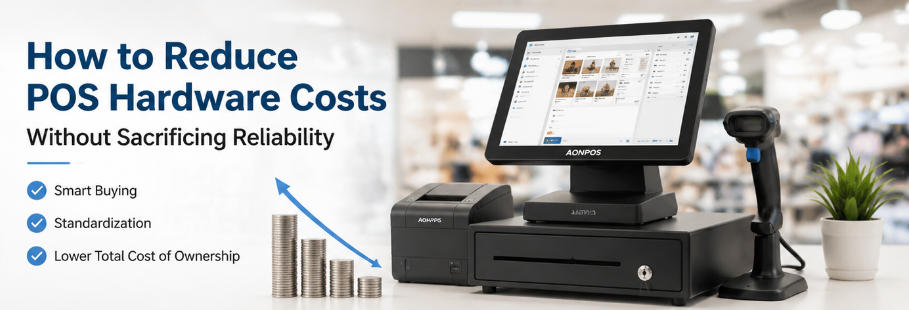
Lower POS ownership costs by standardizing proven configurations, buying only needed modules and planning repair and replacement logistics.
Lower hardware cost is useful only if it does not create a larger operating burden. A cheap terminal can become expensive through unsupported drivers, unique spares or frequent service visits. Review the whole ownership period and remove unnecessary complexity before reducing the specification below the application's needs.

Find the avoidable costs
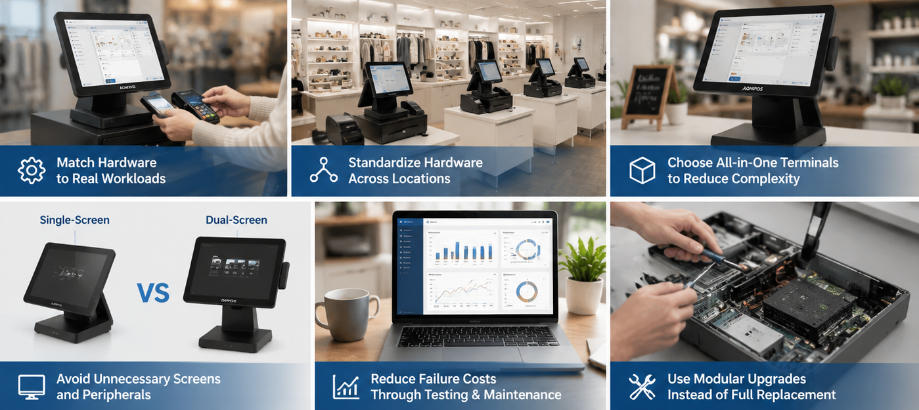
Inventory the current fleet, common faults and unused accessories. Compare equivalent software and peripheral requirements across locations. Standardizing a proven configuration can simplify imaging, spare stock and training. Do not standardize blindly if sites have materially different workloads or environmental conditions.
Make targeted savings
- Choose computing resources from measured requirements rather than the highest available specification.
- Buy optional readers and displays only where the application uses them.
- Keep approved compatible spares instead of many untested alternatives.
- Negotiate clear component-change and warranty-return terms.
- Plan purchasing and shipment quantities with installation capacity and storage risk in mind.
Track whether savings survive deployment
Compare support incidents, downtime and replacement freight with the initial reduction in price. Include subscriptions and software-image maintenance. Avoid unsupported refurbished equipment or reused parts where lifecycle and condition are unknown. A sustainable saving preserves a dependable workstation and a clear recovery process; it does not merely move expense from procurement to store operations.