Desktop POS Hardware Trends: What Buyers Should Validate, Not Just Follow
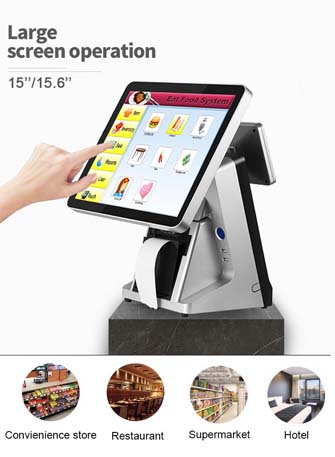
Evaluate compact terminals, serviceable designs and remote management as practical procurement questions rather than assuming every new hardware trend adds value.
POS hardware changes matter when they improve the work performed at the counter. A thinner enclosure or a newer processor is not automatically a better investment. Assess emerging designs against application support, repair access, operating conditions and the cost of keeping a fleet consistent.

Compact design must still be serviceable
All-in-one terminals can simplify counter layout, but ask how storage, power adapters and common peripherals are replaced. A neat enclosure with difficult service access may extend downtime. Check cable routing, mounting options and spare availability on a physical sample rather than judging installation suitability from product images.
Treat new capabilities as test cases
- Customer displays: verify application-controlled content, privacy and recovery after restart.
- Remote management: confirm supported operating systems, access controls and what can actually be recovered remotely.
- Energy-conscious designs: measure consumption under the intended workload instead of comparing processor ratings alone.
- Edge processing: establish whether an application truly needs local inference or merely uses a cloud service.
- Modular accessories: test electrical, mechanical and driver compatibility across the expected service life.
Prefer a stable deployment over a fashionable specification
Request a product roadmap and component-change procedure when planning repeat orders. Pilot new designs at a limited number of counters and compare support incidents, user feedback and replacement effort with the existing fleet. Retain a rollback option until the complete trading workflow is proven. The most useful trend is one that solves a documented constraint without introducing an unsupported dependency.